
A complex autoimmune condition affecting far more than vision. We help you understand it — and treat it with the expertise and compassion it demands.
Thyroid Eye Disease
What Is TED?
More Than an Eye Condition
Thyroid Eye Disease (TED) is an autoimmune disorder in which the body's immune system mistakenly attacks the muscles and fatty tissues behind and around the eyes. It is most commonly associated with Graves' disease, though it can occur without thyroid dysfunction.
The condition causes inflammation, swelling, and structural changes to the orbital tissues — leading to symptoms that can profoundly affect vision, physical appearance, comfort, and quality of life. For many patients, TED is not just a medical condition — it affects identity, confidence, and daily function.
At BioSight Innovations, we understand that treating TED means addressing all of this. Not just the clinical findings, but the full human experience of living with the disease.
Did You Know?
TED affects an estimated 16 per 100,000 people per year. Women are more commonly affected, but TED in men is often more severe.
Early diagnosis and specialist management significantly improve outcomes and quality of life.
Recognizing TED
Symptoms & Signs
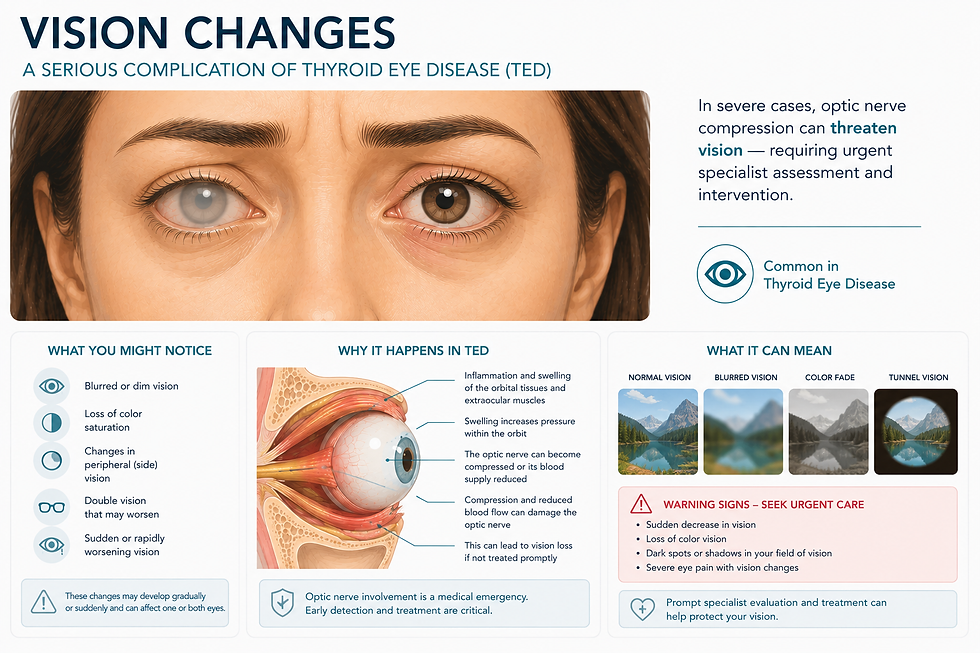
TED can present in many ways, from subtle early changes to more significant alterations in vision and appearance. No two patients experience it exactly the same way.




Disease Course
Understanding the Stages of TED
TED can present in many ways, from subtle early changes to more significant alterations in vision and appearance. No two patients experience it exactly the same way.
01.
Active Phase
Inflammation is ongoing.
This phase — typically lasting 6 months to 2 years — is when disease-modifying treatments like teprotumumab are most effective.
02.
Transition
Inflammation begins to subside. Careful monitoring determines whether surgical or continued medical intervention is appropriate.
03.
Inactive (Stable) Phase
Disease activity has resolved. Surgical correction of residual proptosis, strabismus, or eyelid changes may be considered for functional and aesthetic restoration.
Important Note:
Not all TED follows a predictable course. Some patients have non-inflammatory or chronic TED. This is an area of active research at BioSight Innovations — we have published extensively on treatment options for these underserved patient populations.